



Recently the Australian Taxation Office (ATO) audited a restaurant in Victoria that had claimed deductions for three high-value motor vehicles (a compliance focus that is becoming increasingly common).
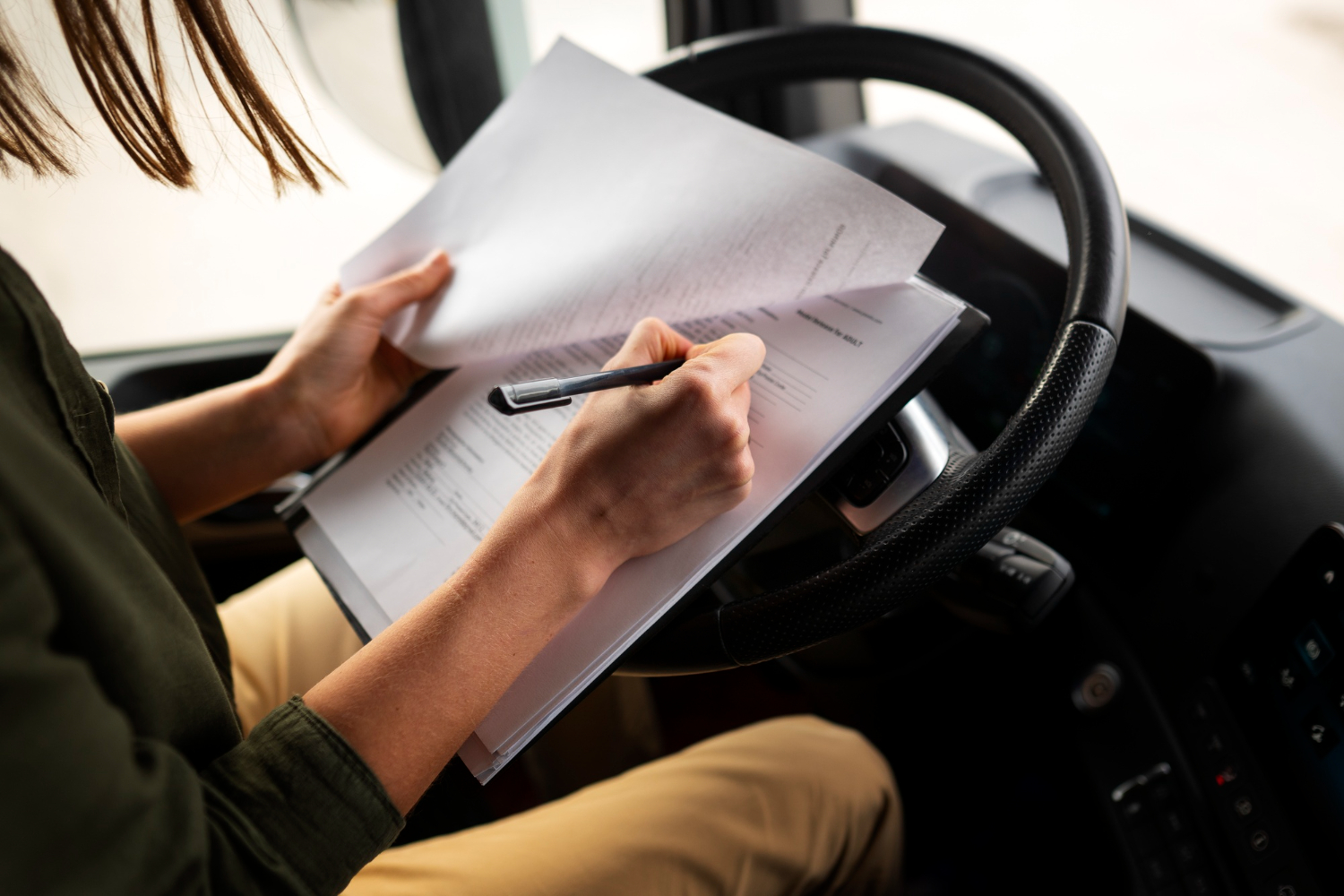
Whilst the business submitted logbooks, this audit found that they didn’t meet the minimum requirements for each journey. On this basis the ATO rejected the logbooks, which resulted in a tax bill of $938,000.
So, what is a logbook?
“A logbook is a mandatory record-keeping document used to calculate the business-use percentage of a car for tax deductions.”
What is required for a logbook?
You must keep a logbook for at least 12 continuous weeks during the income year. That 12-week period needs to be representative of your travel throughout the year. For example, if the logbook shows that for 12 weeks you travelled 5,000km this indicates that on average you would travel 20,000 per annum, which would be substantiated by service records etc.
To be valid the logbook must contain:
- when the logbook period begins and ends
- the car’s odometer readings at the start and end of the logbook period
- the total number of kilometres the car travelled during the logbook period
- the number of kilometres travelled for each journey. If you make two or more journeys in a row on the same day, you can record them as a single journey
- the odometer readings at the start and end of each subsequent income year your logbook is valid for
- the business-use percentage for the logbook period
- the make, model, engine capacity and registration number of the car.
For each journey, record the:
- reason for the journey (such as a description of the business reason or whether it was for private use)
- start and end date of the journey
- odometer readings at the start and end of the journey
- kilometres travelled.
While it might sound like a lot of work, if you are using a paper method it is useful to keep the logbook easily accessible when you get in the car. Additionally, there are many apps available that can help track your movements in the vehicle and assist with your recordkeeping.
How often do you need to do a logbook?
Each logbook you keep is valid for five years, but you may start a new logbook at any time.
Alternatively, if your circumstances change–such as a change in the type of work undertaken by your business–you may need a new logbook.
What happens if I change cars?
There is no need for a new logbook when you change cars. The logbook is used to substantiate the business use and can be used for a different vehicle if you trade or change cars.
Key points from this case
Why did the ATO audit this company?
Individuals associated with the company owned two Porsches and a Mercedes, and as the ATO often undertakes searches with motor registration of the ownership of high-value vehicles that are registered to companies, this can determine who to audit.
Additionally, if you are claiming a vehicle in your name this will also result in a large deduction and stands out to the ATO.
In other instances, audits can take place by random selection.
What was wrong with the logbooks?
The ATO didn’t disclose this information, but in this case a 75% penalty was applied. This level of penalty is imposed when there is “Intentional Disregard”; either they were aware that they were required to and didn’t or alternatively had a false logbook.
Why was the tax bill so large at $938,000?
-
In this case the ATO chose to go back and audit four years (the ATO can audit up to the past five years). As it is a company, Fringe Benefits Tax (FBT) applies for which the FBT liability was $461,000.
-
A penalty for reckless behaviour as implied of 75% being $345,000.
-
ATO interest was charged of $132,000.
Lessons from this case
The key point is for us to who substantiate business use to claim in our tax return with logbooks to ensure:
- they are compliant with the requirements above
- no more than five years old, that is if it was prepared in the 2020/21 can be used for the 2021, 2022, 2023, 2024 and 2025 years. As we are now in the 2026 year a new logbook will be required.
If you need help navigating this in your business or wish to discuss this further, please contact us.